![Logo-cedreo-bkg-white-1.png]](https://help.cedreo.com/hs-fs/hubfs/Logo-cedreo-bkg-white-1.png?height=40&name=Logo-cedreo-bkg-white-1.png)
Once your project is set up, you can quickly generate an exterior rendering using the "Auto mode" in the "Studio" step.
1. Proceed to the next step. "Studio".

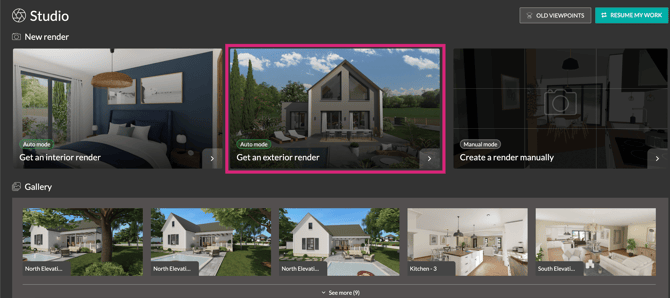
2. In the "New render" section, select the "Auto mode / Get an exterior render" thumbnail.
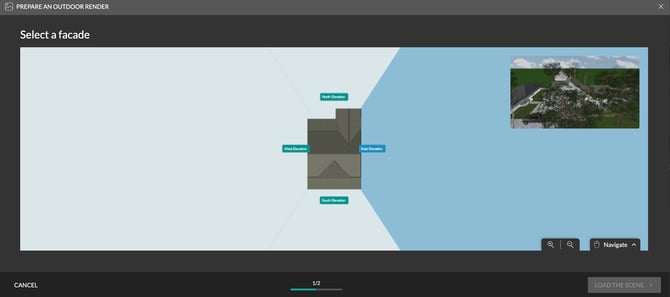
3. A window opens displaying the site plan and four elevation buttons. Select the elevation for which you want to get a render from the available options: "North, East, South, and West Elevations."
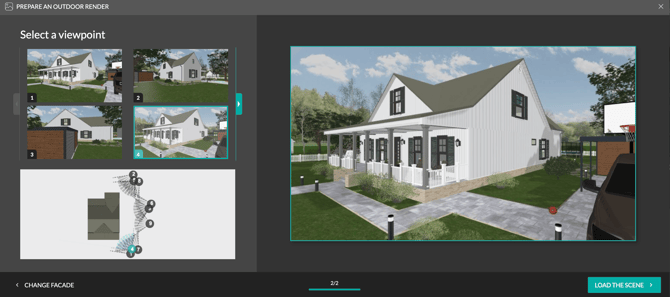
4. Auto mode automatically generates multiple viewpoints to offer you the most relevant angles for your project.
⚠️ It is necessary to set up the exterior of the project to ensure a polished result—even in auto mode—in order to optimize the calculation of viewpoints.
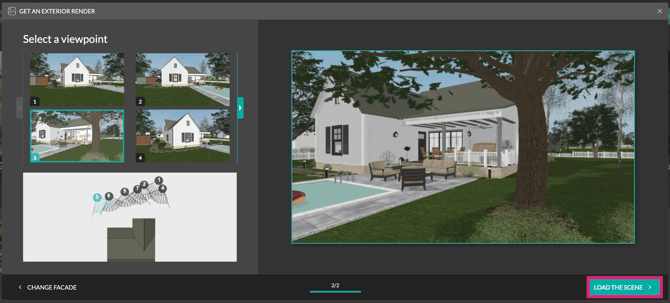
Select the "View" of your choice by clicking either on the real-time preview thumbnail or on a camera in the 2D plan.
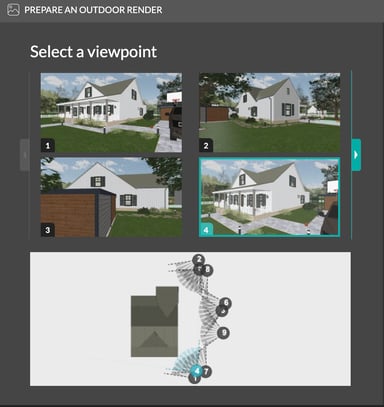
5. Click on "Load the scene".
6.The "Scene" window opens full-size with the selected viewpoint. Access "Scene settings" in the right-hand panel.
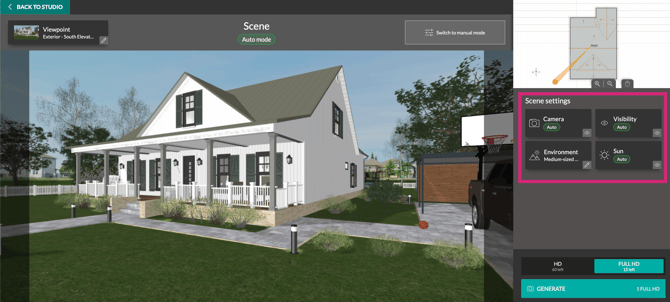
You can only modify the "Environment" setting to choose the background for your rendering. For more information: How to Choose a Rendering Environment.
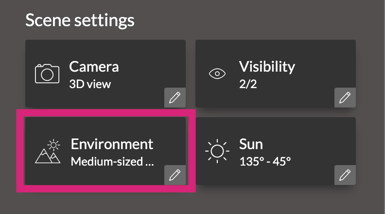
Select a "Cedreo background" or import an image via "Customized background".
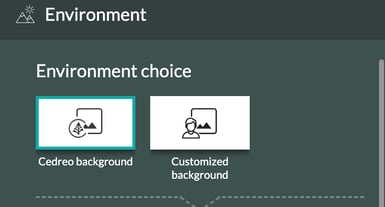
To return to the list of scene parameters, click the "Close" button at the very bottom of the window.

The "Camera," "Visibility," and "Sun" settings cannot be modified in Auto mode. In this mode, they are optimally configured based on your scene.
💡"Switch to manual mode" by clicking the button to adjust these settings. This option can be a good alternative to switching directly to manual mode.
But be careful: this action is irreversible. To return to auto mode, you will have to restart the procedure from the beginning.
7. Choose the rendering format from "HD", and "FULL HD".

⚠️ By default, the format is set to "HD". Check your format before starting a rendering.
8. Finally, click on "Generate" to start creating the visual.

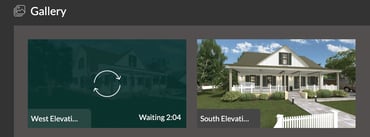
The rendering will appear in the "Studio" step gallery, along with an estimated generation time.
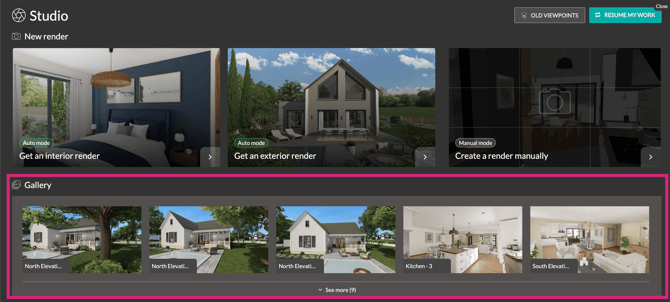
💡You can queue up to two renderings; there is no need to wait for one to finish before starting another.